Last updated 2026-08-18
TL;DR
Alaska requires a licensed electrical administrator or journeyman to install temporary power. A permit comes from your local building department, and fees run $50 to $200 depending on the municipality. Simple setups can clear in one business day. Complex or remote jobs take up to two weeks. There is no separate state temp power license. The standard electrical license covers it.
What qualifies as temporary power in Alaska?
Temporary power is any electrical installation meant to run for a limited time. Construction sites, fairs, film sets, and disaster recovery all fall under it. Article 590 of the National Electrical Code (NEC) covers temporary installations, and Alaska has adopted the NEC with state-specific amendments [10].
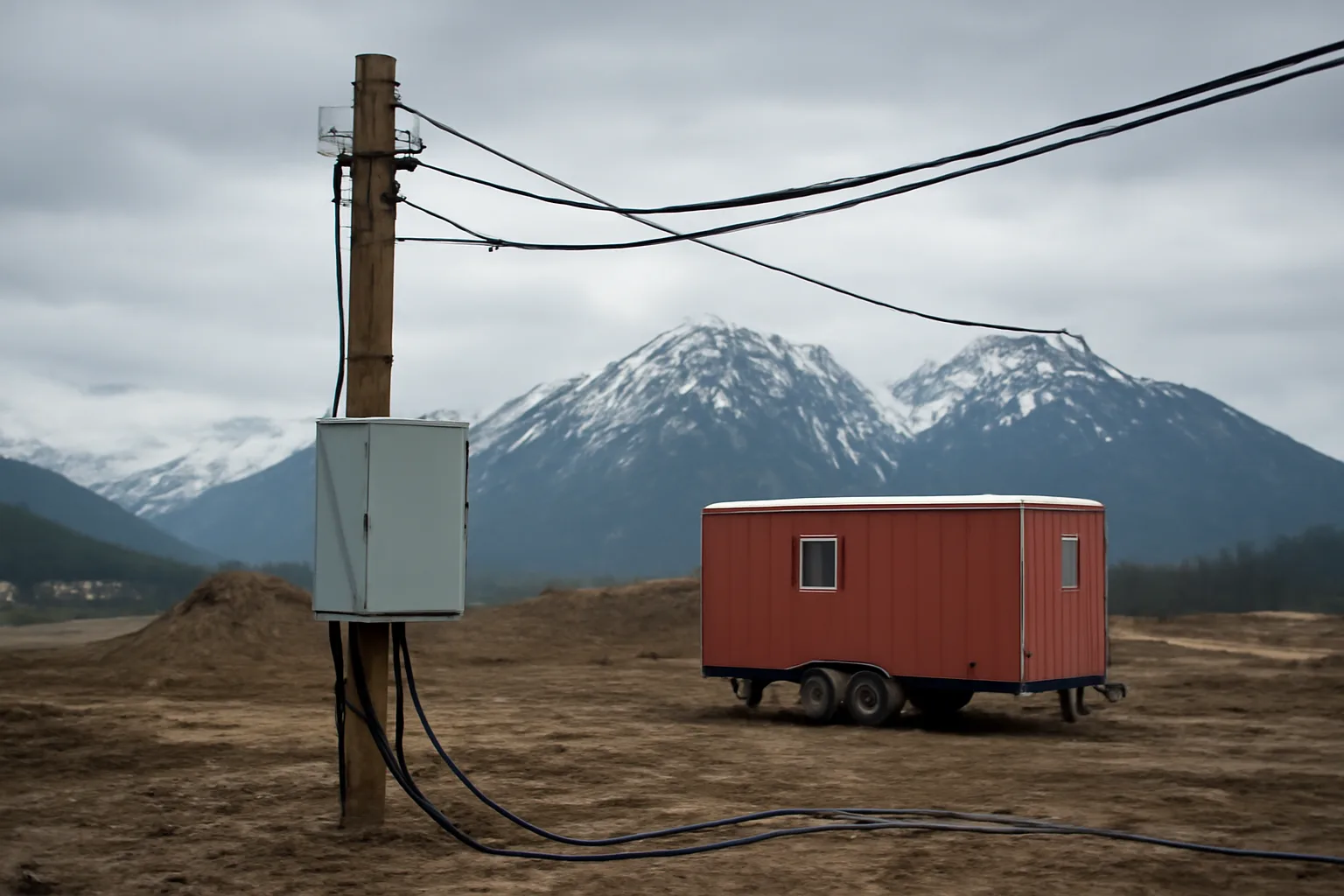
The definition of "electrical work" in 12 AAC 32.010 includes the installation, alteration, or repair of electrical conductors, equipment, or apparatus [2]. So a temporary setup counts as electrical work. You can't string extension cords and call it good. The code wants proper feeders, overcurrent protection, and ground-fault protection. On a construction site, that usually means a temporary service pole or a generator connection.
Do you need a license for temp power in Alaska?
Yes. Alaska Statute AS 08.40.030 says a person "may not engage in electrical work ... unless the person is licensed as an electrical administrator or journeyman electrician" [1]. That covers temporary power the same as any permanent installation.
A contractor or business owner needs a state electrical license. It comes from the Alaska Division of Occupational Licensing, Electrical Administrators Section. You also need a business license under AS 43.70.020 if you're offering electrical services for pay [9].
There's one narrow exemption. AS 08.40.030(b) lets a homeowner do work on a single-family residence they occupy, but you still pull a permit and pass an inspection. Property managers, general contractors, and event organizers don't get that pass. They hire a licensed electrician.
How much does temp power cost in Alaska?
The permit fee is the first cost. It varies by municipality. Here are sample fees from three cities, based on their published fee schedules as of 2024:
| Municipality | Temporary Electrical Permit Fee | Source |
|---|---|---|
| Anchorage | $50 to $150 (depending on service size) | [3] |
| Fairbanks North Star Borough | $75 to $200 | [4] |
| Juneau | $60 to $180 | [5] |
That's just the government's cut. The electrician's labor is separate. A licensed journeyman in Alaska usually charges $80 to $120 per hour, and a full temp power setup (pole, panel, grounding) can eat half a day or more. Then there's gear. A temporary service panel, conductors, and a generator add up fast. A basic generator rental might run $100 to $300 per day.
If you're the one getting licensed, budget for the license itself. The Electrical Administrator application fee is $200, the initial license fee is another $200, and renewal is $200 every two years [7].
Buying the gear is its own line item. A company like TempPowerPath sells a 480V kit with cable and fuel for $179, but a licensed electrician still has to hook it up legally.
How long does it take to get temp power in Alaska?
It depends on where you are and how backed up the building department is. In Anchorage, simple electrical permits (a temporary service for a single-family construction site, for example) are often issued over the counter. The municipality says most over-the-counter permits are processed within 1 to 2 business days [6].
A more complex project, or a smaller borough with one plan reviewer, can mean a week or two. The review clock starts when you submit a complete application. Missing information pushes the date out.
After the permit issues, you schedule the install, then the inspection. Some municipalities inspect the same day. Others want 48 hours. Plan for the full sequence (application, issuance, installation, inspection) to run 3 to 10 business days when things go smoothly. In remote areas, logistics can stretch that to a month.
What is the permit process for temp power in Alaska?
1. Find the local building department. Permits come from the municipality or borough, not the state. In an unincorporated area, the state fire marshal's office handles permits for state-owned buildings [8].
2. Decide who pulls the permit. Only a licensed electrical administrator, or a journeyman working under one, can sign the application. The administrator's name and license number go on the form.
3. Prepare a site plan. Show where the pole or generator sits, the distance from the property line, and the type of installation. Some municipalities want a one-line diagram.
4. Submit and pay. Many departments take online submissions now. The fee is due at application.
5. Wait for issuance. You'll get a job card or a PDF permit. Post it on site.
6. Install to the NEC and the approved plan. The licensed electrician does the work.
7. Call for inspection. The building department sends an inspector to check grounding, overcurrent protection, and code compliance.
8. Energize once approved. The permit is good for the term stated on it, usually 90 days to one year, depending on local rules.
Is temp power different for events versus construction?
Construction sites are the common case, but events add layers. For a fair, concert, or film shoot, you may need a special event permit from the municipality plus a separate electrical permit from the Alaska State Fire Marshal's Office if the event is on state property or involves public assemblies [8].
The fire marshal also enforces the fire code, which can trigger portable generator permits, fuel storage approvals, and crowd-protection measures. For a large event, start the permit process at least 60 days out. The electrical permit itself might move fast. The event approval can take weeks.
What equipment do you need for temp power?
A basic setup isn't complicated. You need a temporary service pole (or a generator), a main breaker panel, grounding rods, and the right cables. For 480V three-phase service, add a step-down transformer or a compatible distribution panel. NEC 590 requires GFCI protection for all 15A, 20A, and 30A receptacles on construction sites.
Pre-assembled kits bundle a cable set, a fuel container, and a 480V interface. They make the gear side easy, but the kit doesn't cover the permit or the electrician. Remote Alaska changes the list. You plan for cold-weather operation, batteries, heated enclosures, and fuel stability.
What are common temp power mistakes in Alaska?
The biggest one is skipping the permit. Unpermitted electrical work in Alaska can draw a stop-work order, fines, and an order to tear the install back out. Municipalities take this seriously.
Another is assuming the homeowner exemption applies. A contractor, a rental, or a commercial building all need a licensed electrician. Period.
People also lowball the timeline. A last-minute application on a Friday afternoon in a small borough might sit until Tuesday. Plan for that.
Running extension cords in place of permanent wiring is a code violation. NEC 590.3(C) says temporary wiring must be removed immediately upon completion of construction. If you're running it for months, it isn't temporary anymore.
The last one is forgetting the inspection. The permit stays open until the inspector signs off, and that can stall your final occupancy permit.
How does temp power work in other states?
Cross a state line and the rules change. An Alaska license buys you no reciprocity in the Lower 48. Check our guides for other states:
- Alabama
- Arizona
- California
- Colorado
- Connecticut
- Florida
Each state runs its own licensing board, permit fees, and processing quirks. The core rule holds everywhere: you need a licensed electrician and a permit. The details vary.
Frequently asked questions
Can I do temporary electrical work myself on my own property in Alaska?
Only if you own and occupy a single-family residence and the work is for that property. Alaska Statute AS 08.40.030(b) exempts homeowners from the licensing requirement, but you still pull a permit and pass inspection. Landlords, business owners, and contractors don't qualify. They need a licensed electrician.
What is a temporary electrical permit?
It's a permit from the local building department for an electrical installation meant to run a limited time, usually 90 days to one year. Examples include construction site power, event setups, and emergency repairs. The permit confirms the installation meets the National Electrical Code.
What happens if I set up temp power without a permit?
The building official can issue a stop-work order and a fine. In some municipalities the fine is double the permit fee. The install may be red-tagged by the utility or the fire marshal, and you could have to remove it right away. If unpermitted work causes a fire or injury, your insurance may deny the claim.
How do I find a licensed electrician in Alaska?
The Alaska Division of Occupational Licensing runs a public license lookup on its website. Search by name or license number. Many local building departments also keep a list of registered electrical contractors. Verify the license is current and active before you hire.
Does Alaska require a separate business license for electrical work?
Yes. If you offer electrical services for pay, you need a business license from the State of Alaska under AS 43.70.020. That's on top of the electrical administrator or journeyman license. The business license costs $50 per year.
What is the difference between a journeyman and an electrical administrator?
An electrical administrator is the qualified person who can pull permits, design systems, and supervise journeymen. A journeyman does the hands-on work but can't pull a permit unless they're also an administrator. Most temporary power permits are pulled by the electrical administrator of record for the contracting firm.
Can I use a generator without a permit in Alaska?
If the generator is a standalone unit powering tools through extension cords, you may not need a permit. Connect it to a building's electrical system or set up a temporary distribution panel, and a permit is required. The connection point has to be code-compliant, and the generator must be listed for the intended use.
Is a temporary power pole required for a construction site?
In most cases, yes. If you pull power from a utility, you need a temporary service pole installed by a licensed electrician, with a meter base, main breaker, and GFCI receptacles. The utility won't energize without an approved permit. Run a generator instead and you skip the pole, but you still need a proper distribution panel.
How do I renew a temporary power permit?
If the project runs past the permit's expiration (often 90 days or one year), apply for a renewal at the same building department. You usually pay a renewal fee, typically less than the original. Some municipalities require a new inspection. You can't extend a permit indefinitely. A permanent installation has to convert to a permanent permit.
Are there any special rules for temp power in remote areas of Alaska?
Remote areas follow the same state licensing rules, but the practical hurdles are bigger. You might fly in an electrician, and the local building official, if there is one, may have limited inspection capacity. Some unorganized boroughs rely on the state fire marshal for permits. Check with the local government or the fire marshal before starting work.
Does the state of Alaska have a unified electrical permit or is it local?
Electrical permits are issued locally by municipalities and boroughs. The state has no unified electrical permit system. In an area without a local building department, the Alaska State Fire Marshal's Office handles permits for state-owned buildings, but private projects in unincorporated areas may still need local approval. Call the Alaska Department of Public Safety for guidance.
What is the NEC code for temporary installations?
Article 590 of the National Electrical Code (NFPA 70) covers temporary installations. It sets requirements for feeder and branch circuit protection, GFCI protection, and removal of temporary wiring once the project is done. Alaska has adopted the NEC with state amendments, so Article 590 applies statewide.
Sources
- Alaska Legislature, AS 08.40.030: A person may not engage in electrical work without a license.
- Alaska Legislature, 12 AAC 32.010: Definition of electrical work includes installation, alteration, or repair of electrical conductors, equipment, or apparatus.
- Municipality of Anchorage, Electrical Permit Fee Schedule: Temporary electrical service permit fees range from $50 to $150 depending on the number of circuits.
- City and Borough of Juneau, Permit Fee Schedule: Temporary electrical permit fees range from $60 to $180 based on service size.
- Municipality of Anchorage, Permit Processing Times: Over-the-counter electrical permits are processed within 1 to 2 business days.
- Alaska Division of Occupational Licensing, Electrical Administrator Fees: Electrical Administrator application fee is $200, initial license fee is $200, and renewal is $200 every two years.
- Alaska Department of Public Safety, Fire and Life Safety, Electrical Permits: The state fire marshal issues electrical permits for state-owned buildings and public assemblies.
- Alaska Legislature, AS 43.70.020: A business license is required for engaging in business in the state.
- National Fire Protection Association, NFPA 70, Article 590: Article 590 covers temporary electrical installations.