Last updated 2026-08-18
TL;DR
In Arkansas, connecting a temp power board takes a licensed electrical contractor or journeyman under the Arkansas Electrical Contractors Licensing Board. A typical job runs $400 to $1,200: a $50 municipal permit (Little Rock), $200 to $800 in equipment, and one to two days of licensed labor. Full setup from permit to green tag usually takes two to five business days.
What is a temp power board and when is it required in Arkansas?
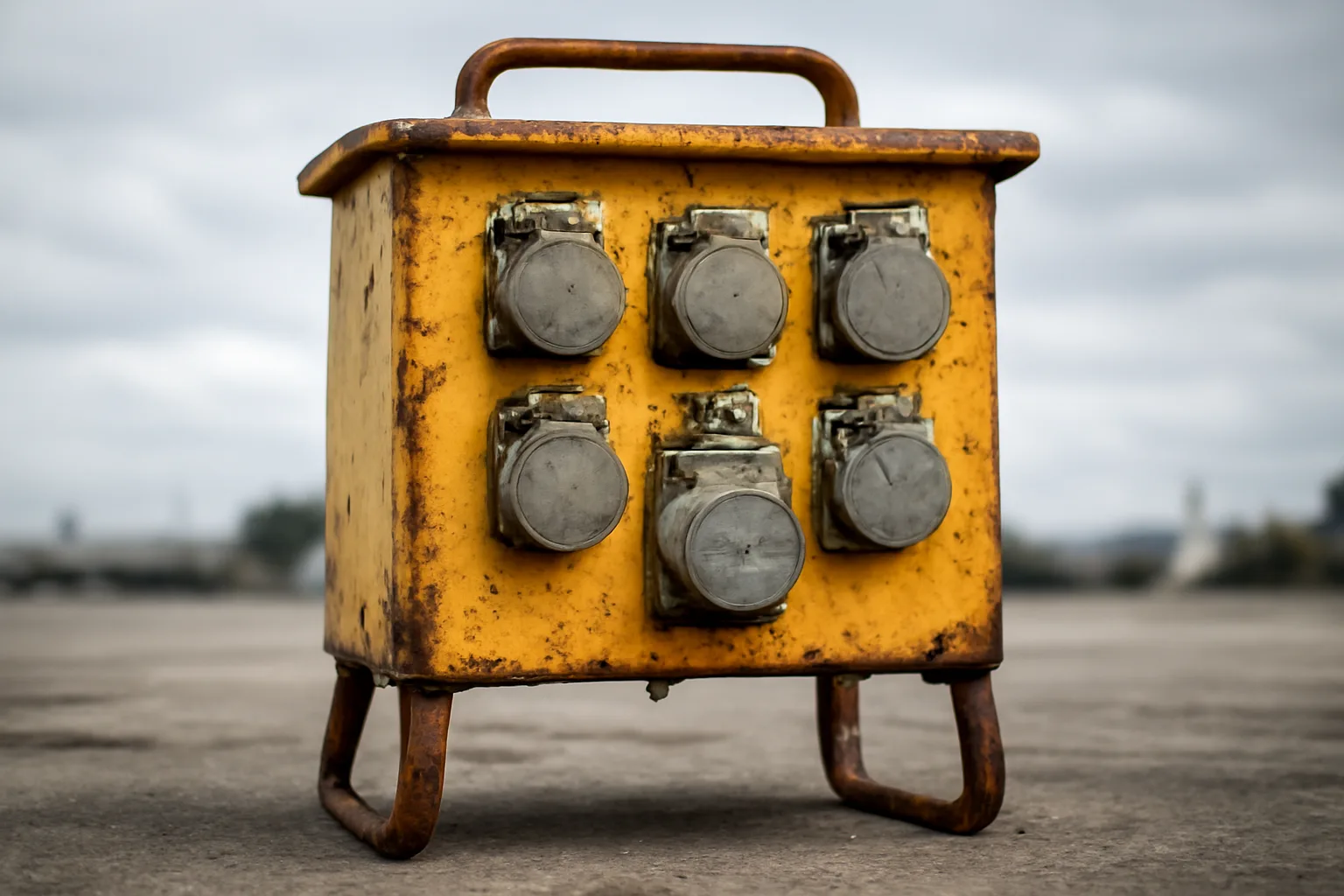
A temp power board is a portable electrical distribution panel, often called a spider box or temporary power tap. These units bring 480V, 240V, or 120V power to construction sites, outdoor events, film sets, and emergency setups before permanent service exists. Arkansas governs them under the 2023 National Electrical Code (NEC), adopted statewide with minor amendments [5].
You need one any time a site has no permanent disconnect yet. That covers a single-family home build all the way up to a large commercial pour. The equipment is a weatherproof enclosure holding breakers, receptacles, and usually a main disconnect. Some boards take 480V three-phase input; others step down to standard outlets. All of them must carry a listing mark from a recognized testing lab like UL or ETL.
Temp power is not a DIY project here. State law and the NEC require a licensed electrician to do the install, and the local authority having jurisdiction (AHJ) has to approve it through a permit and inspection. You can own the board. You cannot connect it unless you hold the right license.
Do you need a license for temp power in Arkansas?
Yes. Arkansas law requires all electrical work to be done by a licensed electrician, and temporary power is no exception. The Arkansas Electrical Licensing Act, codified at Ark. Code Ann. § 17-28-301 et seq., says no person shall engage in electrical work unless licensed under the chapter [1]. That covers installing, connecting, and altering temp power boards.
The Arkansas Electrical Contractors Licensing Board, part of the Arkansas Department of Labor and Licensing, oversees licensing. It issues Master Electrician, Journeyman Electrician, and Electrical Contractor licenses. Anyone you hire for temp power must hold an active license in good standing. If you want to pull your own permit, you have to be a licensed electrical contractor.
Verification takes about a minute on the board's online license lookup [8]. Enter the number or the name. Never trust a verbal claim. Get the license number and check it yourself before anyone touches a wire.
How much does temp power cost in Arkansas?
A standard temp power setup in Arkansas runs $400 to $1,200 in 2025, all in. The spread depends on equipment size, the local permit fee, and labor hours. Here is what your money buys:
| Item | Typical Cost Range |
|---|---|
| Equipment (one-time purchase, 50A to 100A board) | $200 to $800 |
| Local municipal permit (City of Little Rock) | $50 flat [3] |
| Licensed electrician labor (2 to 4 hours) | $150 to $600 |
| Total estimated project | $400 to $1,200 |
Equipment pricing tracks listings from major industrial supply houses. A basic 50-amp spider box runs about $200 to $400. A durable 100-amp 480V board lands between $500 and $800 [6]. Labor rates, overhead included, commonly fall between $75 and $150 per hour, built off BLS wage data for Arkansas electricians [4]. Most jobs take two to four hours.
Want a rugged 480V kit with cable and a fuel-rated enclosure? Some suppliers sell turnkey packages. TempPowerPath sells a one-time $179 kit (see /start) covering the board, cable, and 480V distribution for many project types. Permits and labor are separate.
How long does it take to get temp power approved and installed?
Plan on two to five business days from pulling the permit to final inspection. Many smaller Arkansas cities issue over-the-counter permits the same day. In Little Rock and other metro areas, online permitting typically returns a decision in 24 to 48 hours for a straightforward temporary service [3].
Installation by a licensed electrician usually takes one full day. After that you call for a rough-in or final inspection. The inspector's turnaround depends on their workload. Most jurisdictions schedule within one to two business days. In peak construction season it can stretch to three or four.
A typical timeline:
- Day 1: Submit the permit application online with the licensed electrician's signature. Often approved same day or by end of Day 2.
- Day 2 to 3: Electrician installs the board and all downstream wiring.
- Day 3 to 4: Inspector visits. If the work meets NEC 590 and local amendments, you get the green tag.
Rush permits are rare. Build in an extra day or two when you're coordinating with other trades.
What is the Arkansas electrical permit process for temp power?
Local building departments issue the permit, not the state board. In Little Rock, Fayetteville, or an unincorporated county, you apply through the city or county planning office. The application has to include a scope of work, the license number of the responsible electrician, and a description of the temporary service.
Most applications go online now, through systems like Accela. You pay the permit fee, often a flat rate for temporary service. In Little Rock, a temporary electric permit costs $50 [3]. Some municipalities base the fee on the valuation of the electrical installation instead.
After installation, the electrician requests an inspection. The inspector checks:
- Proper grounding and bonding
- GFCI protection on all 15A and 20A 125V receptacles
- Weatherproof enclosures (NEMA 3R minimum outdoors)
- Overcurrent protection sizing
- Clear labeling of disconnects
Once the inspector signs off, you can energize. Keep the permit card posted at the board. Many AHJs require it.
How do you select the right temp power board for your Arkansas project?
Not all temp boards are equal. Arkansas weather (summer humidity, sudden thunderstorms, winter freezes) demands a tough enclosure. NEMA 3R is the minimum outdoor rating. Near fuels or solvents, you need a Class I, Division 2 rating or a fuel-rated enclosure per NEC 590.3.
For 480V three-phase construction sites, a transformer-integrated board may be needed to step down to 208Y/120V for tools. Smaller residential jobs usually run on a 50A spider box fed from a 240V supply.
What to look for:
- Listed by UL, ETL, or CSA (required by the NEC and Arkansas code)
- GFCI breakers on all general-use receptacles
- Strain-relief fittings where cables enter
- Weather-tight covers and lockable hardware
- Enough amperage and circuit count for your load schedule
Short-term job and no desire to own the board? Rental yards across Arkansas rent temp power boards by the week. Confirm with the rental company that the unit is listed and recently inspected.
What are common temp power board installation pitfalls in Arkansas?
Even a licensed electrician can miss details that draw a red tag. These are the problems inspectors flag most often in Arkansas:
- Missing GFCI protection. NEC 590.6(A) requires all 125V, 15A, 20A, and 30A receptacles used by personnel to have GFCI protection. No exceptions.
- Inadequate grounding. The board needs a grounding electrode conductor tied to a driven ground rod or other electrode. Two rods are often required unless you prove low resistance.
- Unsupported cords. Cables must be protected from physical damage and supported at intervals no greater than those in NEC 590.4.
- A board rated for indoor use sitting outdoors. The first rain shuts it down.
- No labeling. The main disconnect and branch circuits have to be legibly marked.
Arkansas inspectors follow the 2023 NEC closely. One call to your local building official before installation can save you a re-inspection fee and lost days.
Should you rent or buy a temp power board in Arkansas?
For a one-week framing project, renting wins. Rental rates for a 50A spider box in central Arkansas run $50 to $150 per day, with weekly discounts common. Need a board for several months or across multiple job sites? Buying pays off after roughly 10 to 14 rental days.
Purchase prices run $200 to $800 for common 50A to 100A units [6]. Add sales tax and you own an asset you can use on every future job. If you buy, store it dry and have an electrician check it before each use. The NEC requires all temporary equipment to be visually inspected for damage and listing status before each new connection.
Some Arkansas electricians prefer buying because they then control condition and availability. Rental units show up with missing covers, worn receptacles, or outdated GFCI modules. Go that route and test everything before you accept delivery.
How do you verify an Arkansas electrical contractor's license?
The Arkansas Electrical Contractors Licensing Board runs a free public lookup on its website [8]. Search by name, license number, or company. Results show license type (Contractor, Journeyman, Master), status, expiration date, and any disciplinary actions.
Never skip this step. An expired or nonexistent license means the work is unpermitted, which voids your insurance and opens you to fines. In Arkansas, contracting without a license is a misdemeanor and can bring a stop-work order.
Ask for a certificate of insurance too. A legitimate contractor carries general liability and workers' compensation. Temp power installs on construction sites are high-risk. Confirm the coverage before work starts.
What temp power safety requirements apply under Arkansas code and the NEC?
Arkansas enforces the 2023 NEC through local building departments, with the Electrical Licensing Board acting as the statewide rulemaking body [5]. Article 590 covers temporary installations. The requirements that matter most for temp power boards in Arkansas:
- All receptacles not part of the permanent wiring must be GFCI-protected (590.6)
- Feeders and branch circuits must be protected by overcurrent devices (590.8)
- Cords and cables must be protected from damage and kept within their temperature rating (590.4)
- Temporary services must be disconnected and removed immediately when construction is done (590.3)
Local amendments are rare but possible. Check with your city or county building office for any local rule that overrides the state-adopted code, especially on clearance distances or the number of temporary service poles allowed.
Where can I find related state guides and resources?
Cross state lines and the rules change fast. Our guides for nearby states cover the equipment and licensing landscape:
- Alabama temp power board
- Florida temp power board
- Georgia temp power board
- California temp power board
- Arizona temp power board
- Alaska temp power board
Each article spells out the specific license, permit, and equipment requirements for that state. When you're stacking compliance across states, having the real code references in one place saves hours of search-and-guesswork.
For a complete 480V kit with cable and fuel-rated enclosure, TempPowerPath's one-time $179 solution (see /start) has run on film sets and industrial sites across the South. It ships with documentation that helps the electrician verify listing marks for the inspector.
Frequently asked questions
Do I need a license to install a temp power board in Arkansas?
Yes. Ark. Code Ann. § 17-28-301 requires any person doing electrical work, including temporary power, to hold a license from the Arkansas Electrical Contractors Licensing Board. You must either be a licensed electrical contractor or hire one. Owning the board changes nothing; the connection is the licensed part.
How much does a temp power board cost in Arkansas?
The board itself runs $200 for a basic 50A spider box to $800 for a 480V, 100A unit, depending on features. Add a local permit ($50 in Little Rock) and two to four hours of licensed labor ($150 to $600), and the total project typically lands between $400 and $1,200.
How long does it take to get temp power set up in Arkansas?
Plan on two to five business days. Permit approval takes one to two days in most cities, installation by an electrician takes one day, and the inspector usually arrives within one to two business days after the call. In peak season, inspections can slip an extra day.
Can I install a temp power board myself in Arkansas?
No. State law requires a licensed electrician. Even if you own the board, the connection, grounding, and overcurrent protection have to be done by someone holding a valid Arkansas electrical license. Unpermitted work can lead to fines, stop-work orders, and denied insurance claims.
What is the Arkansas Electrical Contractors Licensing Board?
It is the state agency under the Arkansas Department of Labor and Licensing that issues, renews, and disciplines electrical licenses. The board sets exam requirements, adopts the NEC edition for the state, and runs a public license lookup tool anyone can use for free.
Does Arkansas require a permit for temporary power?
Yes. Most cities and counties require an electrical permit for any temporary service. The permit is issued locally, not by the state board. Fees vary; Little Rock charges $50 for a temporary electric service permit. Your licensed electrician has to sign the application.
How do I find a licensed electrician for temp power in Arkansas?
Search the state's license database online for active contractors and journeymen. Ask for the license number upfront and verify it yourself. Local builders' associations and supply houses can also point you to contractors who work with temporary power regularly.
Can I use a portable generator instead of a temp power board in Arkansas?
Yes, but it is not always equivalent. A generator still has to meet NEC 590 and GFCI rules when it supplies construction receptacles. A temp power board is often needed downstream of the generator to distribute and protect circuits. The same licensing and permit rules apply either way.
What safety standards apply to temporary power boards in Arkansas?
Arkansas has adopted the 2023 NEC. Article 590 governs temporary installations, requiring GFCI protection, weatherproof enclosures, proper grounding, and overcurrent protection. The board must carry a listing mark from a recognized testing lab like UL, and the AHJ enforces these rules through inspection.
How do I get a temp power permit in Little Rock, Arkansas?
Apply through the City of Little Rock planning and development online portal or in person. You or your electrician submit a description of the work, the electrician's license number, and the $50 fee. Most simple temporary service permits come back within 24 to 48 hours.
What is the difference between a temp power board and a spider box?
A spider box is a specific type of temp power board, usually a compact 50A unit with multiple 120V GFCI outlets. A temp power board can be larger, with 480V input and multiple voltage outputs. The terms overlap; any compliant portable distribution unit falls under NEC 590.
Is a temp power board covered by Arkansas electrical license reciprocity?
Arkansas has reciprocity agreements with several states for electrical licenses. Temporary power installation still requires an active Arkansas license or a recognized reciprocal one. Check the Electrical Licensing Board's website for the current reciprocal list, and confirm the license covers commercial or residential work as needed.
Sources
- Arkansas Department of Labor and Licensing, Electrical Licensing Laws and Rules: Arkansas Electrical Licensing Law (Act 870 of 2001, Ark. Code Ann. § 17-28-301 et seq.) requires licensing for all electrical work.
- Arkansas Department of Labor and Licensing, Electrical Licensing Fee Schedule: The Electrical Contractor license fee is $100 per year; Journeyman license fee is $50.
- City of Little Rock, Electrical Permits: The temporary electric service permit fee is $50 flat, as listed in the city's permit fee schedule.
- U.S. Bureau of Labor Statistics, Occupational Employment and Wages, May 2023: Electricians: Mean hourly wage for electricians in Arkansas is about $24.28; typical billing rates range from $75 to $150 per hour including overhead.
- Arkansas Department of Labor and Licensing, Electrical Rules (006.05.1 Ark. Code R.): The state of Arkansas has adopted the 2023 National Electrical Code with minor amendments.
- Grainger, DAYTON Temporary Power Distribution Panel, 6C580: A 50-amp spider box costs approximately $239 as of August 2025; similar units range $200 to $400.
- Home Depot, GE 100 Amp Temporary Power Outlet Panel: A 100-amp temporary power panel is priced around $300, with heavy-duty 480V units reaching $800.
- Arkansas Department of Labor and Licensing, Electrical License Search: A free public lookup allows verification of Arkansas electrical licenses by name or number.